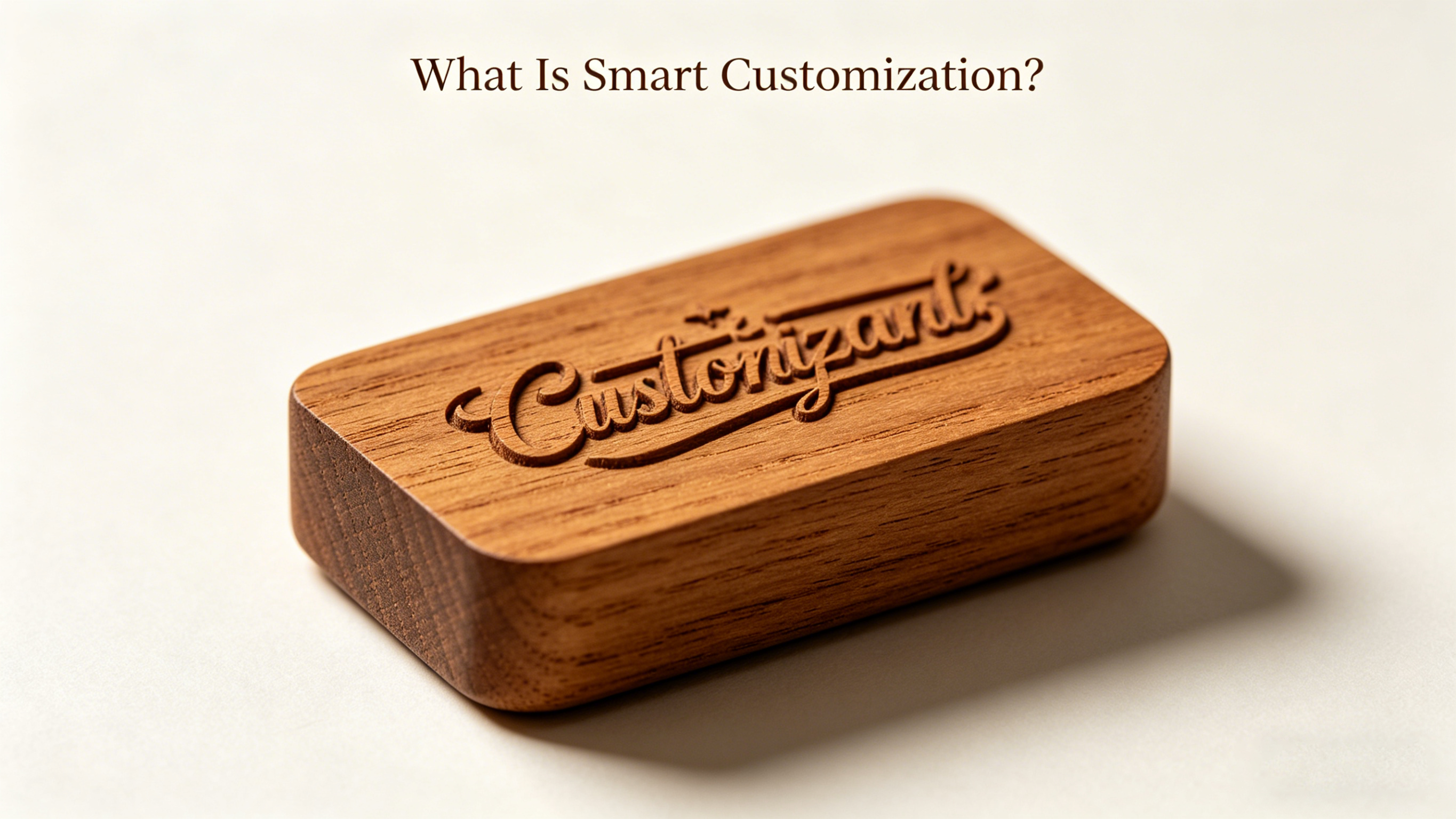
In the era of digital innovation and personalized experiences, customization has evolved beyond traditional handcrafting—and smart customization is leading the charge. But what is smart customization, and how does it transform the world of custom wooden products? This guide breaks down the definition of smart customization, its key differences from standard customization, its benefits for both customers and craftspeople, and how it’s redefining what it means to own a personalized wooden piece.
What Is Smart Customization, Exactly?
Smart customization is the fusion of technology, data, and craftsmanship to create personalized products that are not only tailored to a customer’s preferences but also efficient, precise, and aligned with their unique needs. Unlike traditional customization— which relies heavily on manual communication and handcrafting—smart customization leverages digital tools, AI, and data-driven insights to streamline the process, enhance precision, and deliver a more seamless, personalized experience.
When it comes to custom wooden products, smart customization takes the best of handcrafted quality and pairs it with digital intelligence. It’s not about replacing skilled artisans; it’s about empowering them with tools that make customization faster, more accurate, and more accessible. From digital design previews to AI-assisted personalization suggestions, smart customization ensures that every wooden piece is tailored to the customer’s vision—without the hassle of endless back-and-forth or manual errors.
Key Features of Smart Customization for Wooden Products
Smart customization stands out from traditional customization thanks to its focus on technology, efficiency, and precision. Here are the core features that define it for custom wooden products:
1. Digital Design & Real-Time Previews
One of the biggest advantages of smart customization is the ability to visualize your custom wooden product before it’s crafted. Through online tools or interactive platforms, customers can select wood types, sizes, finishes, and personal details (like engravings or designs), and see a real-time digital preview of the final product. This eliminates guesswork and ensures the customer’s vision matches the end result—whether it’s a custom wooden toy, a personalized keepsake box, or a wooden home decor piece.
2. Data-Driven Personalization Suggestions
Smart customization uses data (with customer consent) to offer personalized recommendations. For example, if a customer is looking for a custom wooden gift for a baby shower, the platform might suggest popular designs, engraving options, or wood types based on similar customer preferences. This not only saves customers time but also helps them discover personalization ideas they might not have considered on their own.
3. Automated Precision Crafting
While the core of wooden product crafting remains hand-done by skilled artisans, smart customization uses automated tools (like CNC machines or laser engravers) to ensure precision. These tools can replicate complex designs, engravings, or cuts with unmatched accuracy—ensuring that every detail of the customer’s request is executed perfectly, every time. This blend of handcrafting and automation balances warmth and precision, resulting in high-quality, consistent custom wooden products.
4. Seamless Online Collaboration
Smart customization simplifies the collaboration process between customers and craftspeople. Through online portals, customers can submit their ideas, track the progress of their order, and communicate with the team—all in one place. There’s no need for endless emails or phone calls; everything from design approval to order updates is streamlined, making the customization process fast, convenient, and stress-free.
Smart Customization vs. Traditional Customization (For Wooden Products)
It’s important to understand how smart customization differs from traditional customization—especially when it comes to wooden products. Here’s a clear breakdown:
|
Feature
|
Traditional Customization
|
Smart Customization
|
|---|---|---|
|
Design Process
|
Manual sketches, limited previews
|
Digital previews, real-time adjustments
|
|
Precision
|
Dependent on artisan skill, potential for human error
|
Automated tools for consistent, precise details
|
|
Efficiency
|
Longer lead times, more manual communication
|
Streamlined process, faster lead times
|
|
Personalization
|
Limited to customer’s explicit requests
|
Data-driven suggestions + customer control
|
The key takeaway: Smart customization enhances traditional craftsmanship, making it more accessible, efficient, and precise—without losing the warmth and quality that makes custom wooden products special.
Benefits of Smart Customization for Custom Wooden Products
Smart customization offers advantages for both customers and craftspeople, making it a win-win for the custom wooden product industry:
For Customers:
-
Convenience: Customize your wooden product online, anytime, with real-time previews and easy communication.
-
Precision: Get exactly what you want—no guesswork, no errors, and consistent quality.
-
Inspiration: Data-driven suggestions help you explore personalization options you might not have thought of.
-
Faster Delivery: Streamlined processes mean shorter lead times, so you get your custom wooden piece sooner.
For Craftspeople:
-
Efficiency: Automated tools reduce manual labor, allowing artisans to focus on what they do best—crafting high-quality woodwork.
-
Reduced Waste: Digital previews and precise crafting minimize material waste, saving time and resources.
-
Higher Customer Satisfaction: Clear communication and accurate results lead to happier customers and more repeat business.
Examples of Smart Customization in Custom Wooden Products
Smart customization isn’t just a concept—it’s already transforming how custom wooden products are made and personalized. Here are some real-world examples:
-
Interactive Design Tools: An online platform where customers can select a wooden toy, choose the wood type, add a custom engraving, and see a 3D preview of the final product before ordering.
-
AI-Assisted Engraving: A tool that suggests font styles, sizes, and placement for engravings based on the customer’s product choice (e.g., a smaller font for a wooden keychain, a larger font for a wall sign).
-
Order Tracking: A digital portal where customers can track the progress of their custom wooden piece—from design approval to crafting to shipping.
-
Customization History: A feature that saves a customer’s past customization preferences, making it easy to reorder or create similar pieces in the future.
Final Thoughts: Smart Customization Is the Future of Custom Wooden Products
Smart customization is not about replacing the art of handcrafted wooden products—it’s about elevating it. By combining technology, data, and craftsmanship, it makes customization more accessible, efficient, and precise, while still preserving the warmth and uniqueness that makes wooden products so special.
Whether you’re looking for a custom wooden toy, a personalized keepsake, or a one-of-a-kind home decor piece, smart customization ensures that your vision is brought to life with accuracy and ease. It’s the future of personalized wooden products—where technology meets tradition, and every piece is as unique as the person who owns it.